

People seek out assistance from fitness professionals for a variety of reasons. As a fitness professional, you are uniquely positioned to notice subtle warning signs of disordered eating, eating disorders and/or Relative Energy Deficiency in Sport (RED-S) due to your frequent interactions with and close monitoring of your clients.
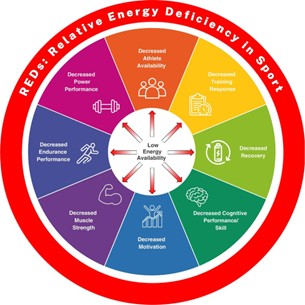
What is RED-S and why should I screen my clients?
Previously known as “The Female Athlete Triad”, Relative Energy Deficiency in Sport is the more appropriate name for a condition that can exist in people of all genders. The hallmark of RED-S is low energy availability (LEA) or calorie intake insufficient to meet physiological needs and training demands.
Some of the risks include:
- Escalation of disordered eating into an eating disorder
- Deficiencies in micronutrients
- Slower recovery between training days
- Muscle Atrophy
- Frequent illness
- Limited or stalled progress in training
- Hormonal insufficiency
- Decreased cognition
- Increased Cortisol levels
- Escalation of body image dissatisfaction into body image obsession/preoccupatio
- Development of disordered thinking about physical activity, body and/or nutrition
Screening Tools for LEA/RED-S:
- RED-S specific screening tool (RST): https://assets.cureus.com/uploads/original_article/pdf/30734/1612430181-1612430175-20210204-18268-i9k6n7.pdf
- International Olympic Committee Relative Energy Deficiency in Sport Clinical Assessment Tool Version2 (IOC REDs CAT2): https://stillmed.olympics.com/media/Documents/Athletes/Medical-Scientific/Consensus-Statements/REDs/IOC-REDs-CAT-V2.pdf
The RED-S Risk assessment model is adapted to aid clinicians’ decision making for determining an athlete’s readiness to return to sport/physical activity.
Important Considerations:
- Eating disorders have the second highest mortality rate of all mental illnesses, only behind opioid use disorder
- Anyone can suffer from an eating disorder or disordered eating regardless of age, race, gender, body weight, body size or physical activity level
- Physique-focused sports and weight-limiting sports (i.e. gymnastics, swimming/diving, wrestling, track/field, equestrian sports) pose increased risks for athletes but any athlete can be at risk for developing a disordered relationship with food, body and exercise
- Dieting in childhood/adolescence is a strong predictor of eating disorder behaviors
- Knowing when to refer clients to qualified nutrition and mental health professionals can help them fully heal and excel at physical activity or their chosen sport
Some Warning Signs of Disordered Eating and Eating Disorders in Your Clients*:
- Elimination of entire food groups
- Frequent body checking for perceived flaws in appearance
- Difficulty with body temperature regulation
- Dental problems
- Excessive low/no-calorie fluid intake
- Preoccupation or frequent discussion of food, calories, weight or body size
- Obsessive or rigid exercise behaviors (unable to take breaks when fatigued, sick/injured)
- Limited range of “allowed” or “accepted” foods
- Cuts/calluses on top of hand/fingers from self-induced vomiting
- Frequent weight fluctuations or body composition changes
- Use of diet pills, appetite suppressants, laxatives, diuretics
*this is not an exhaustive list nor should it be used to diagnose an eating disorder
When to Add a Mental Health Professional to the Team:
- Client scores on any of the screeners indicate need for further mental, medical or nutrition
assessment - You have observed concerning behaviors, comments or trends and want further assessment from a specialist
- Client asks in-depth questions regarding their personal nutrition or mental health care that go beyond general information you can provide as a fitness professional
- Client has disclosed disordered exercise or eating behaviors and have been unable to stop the behaviors